
What does wound care at home involve?
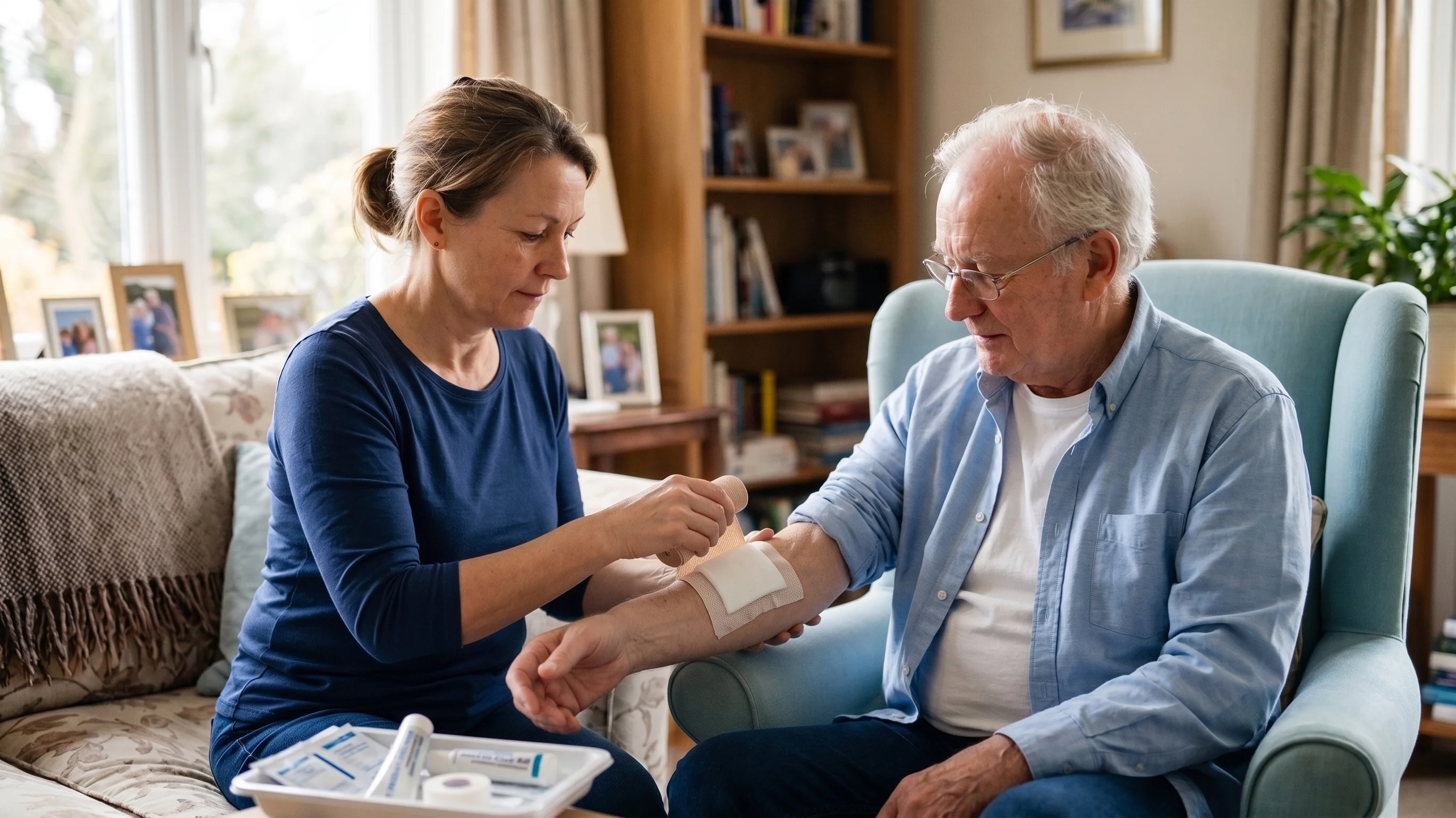
Wound care covers the regular clinical attention a wound needs while it heals. In practice, that usually means cleaning the area, changing dressings, recording how it is progressing and noticing anything that may need a clinician’s input.
Some wounds need attention for a fortnight. Others, particularly those that are chronic, such as leg ulcers, need support over a much longer period. Acute wounds heal within a year more often than chronic ones, which is why consistent, well-recorded care makes a difference to what happens next.
The types of wounds we support
Our teams provide wound care for a wide range of needs, including:
- Post-operative and surgical wounds: Dressing changes after a planned procedure or a hospital discharge
- Pressure ulcers, sometimes called bedsores, which develop when skin is under sustained pressure
- Leg and foot ulcers, including venous and diabetic ulcers; wounds below the knee that have been present for more than two weeks, and usually need dressings changed at least weekly
- Skin tears and minor traumatic wounds, which are more common where skin has become thinner or more fragile
- Wounds linked to a long-term condition, such as diabetes, where healing can take longer and needs closer observation
If you are not sure which category applies, our team can talk it through with you.
What our nurses and carers can do
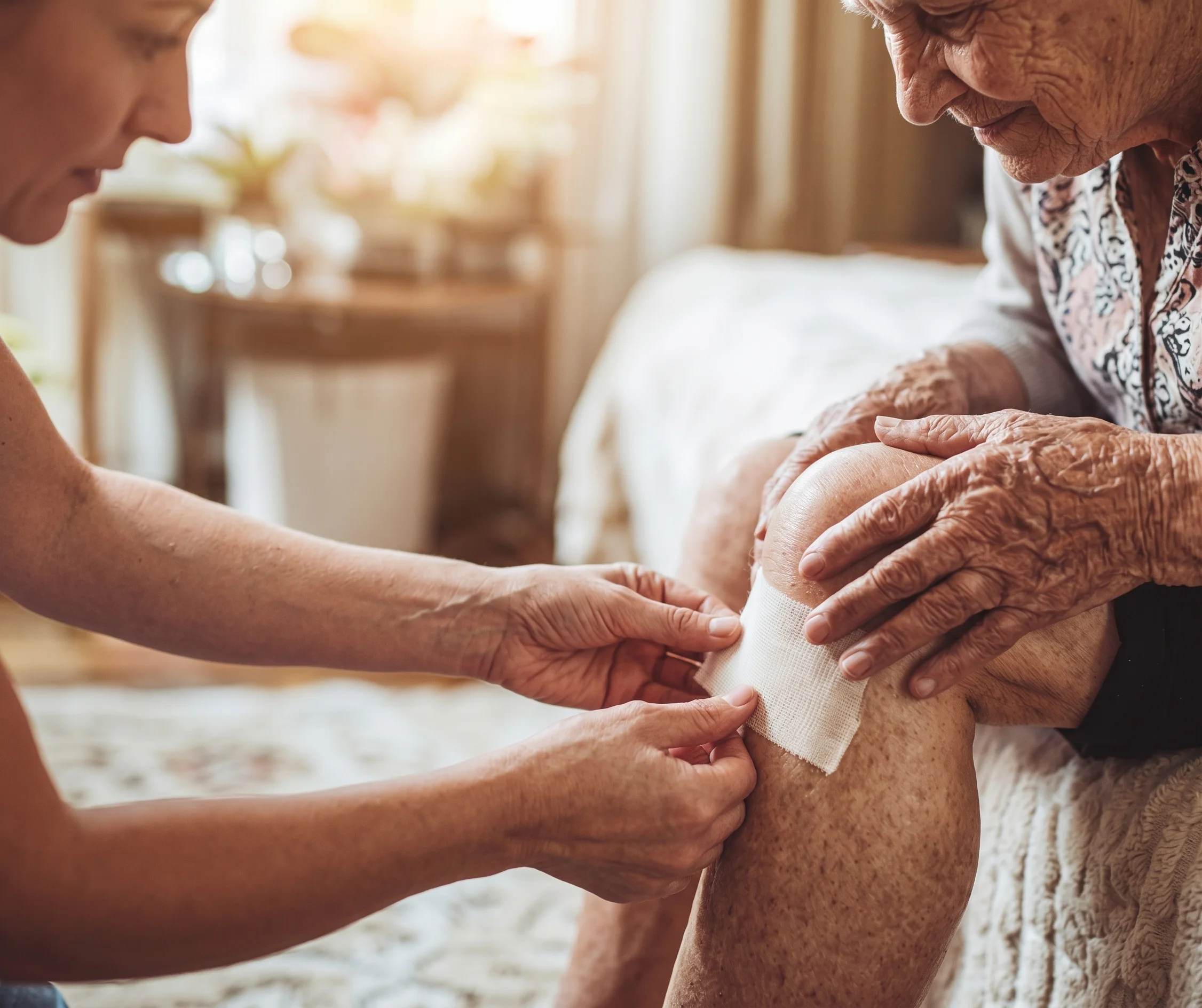
- Our registered nurses lead the service
A local registered nurse carries out a comprehensive assessment, agrees the clinical care needs, undertakes risk assessments and develops the care plan with you and your family.
They train the carers who will deliver your care, carry out regular competency assessments, provide ongoing clinical monitoring and supervision, and evaluate whether the care is achieving what it should. In some cases the nurse provides hands-on care directly.
- Our trained carers deliver the day-to-day care
Because they are trained by our registered nurses and signed off as competent for the specific tasks involved, they can carry out delegated healthcare tasks in your home rather than those visits depending entirely on community nursing services. They also notice and report changes between visits.
Our regional nurses are registered with the Nursing and Midwifery Council (NMC), and each holds a nursing qualification in at least one specialism, including adult, children’s, learning disability and mental health nursing.
We will never blur that line. Clinical wound care is delivered by clinicians, and every element of support is set out in the care plan before it begins, so you always know what to expect from each visit.
How wound care at home works with your wider healthcare team
You may already be under a GP, hospital team, or community nursing service.
We work collaboratively with other healthcare professionals, multidisciplinary teams, commissioning groups and therapy providers involved in your care. Records are kept consistently and changes are communicated to the right person. Where a wound needs input beyond what is agreed, we raise it promptly and through the appropriate route.
Signs a wound may need further attention
Speak to a nurse, GP or 111 if you notice:
- Increasing redness, warmth or swelling around the wound
- Yellow or green discharge, or an unpleasant smell
- Pain that is getting worse rather than easing
- A wound that shows no sign of improvement after a week or two
- A high temperature, chills or feeling unwell in yourself
Some symptoms need urgent attention. Confusion or slurred speech, breathlessness, severe muscle pain, a racing heartbeat, or cold, clammy, mottled skin can indicate sepsis, which is a medical emergency. Call 999 or go to your nearest A&E.
Where one of our nurses is visiting regularly, that ongoing familiarity makes it easier to spot when something has changed.
Wound care for children and young people
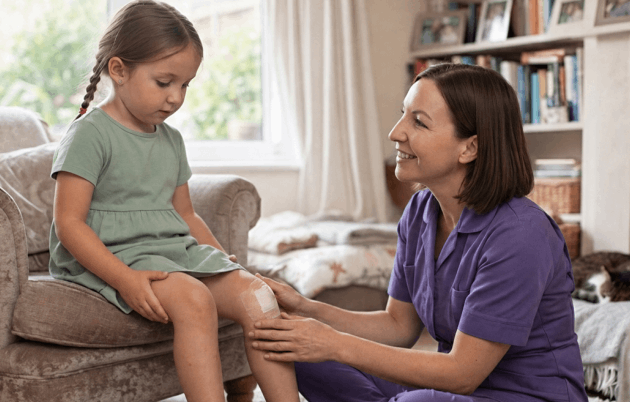
Wound care for a child involves the whole family, and the support needs to reflect that. Our children’s nursing teams provide wound care at home for children with complex needs, working closely with paediatric teams, community nurses and parents.
The emphasis is on keeping visits calm and unhurried, explaining what is happening in a way that suits the child’s age and understanding, and supporting parents and siblings alongside the clinical care itself.
How we shape wound care around you
Before care begins, we take time to understand the wound, the wider health picture, existing clinical instructions, your routine and what matters to you.
From that, we build a personalised care plan setting out what each visit includes, how often visits happen, who delivers them and how concerns are communicated. Wound care can also be combined with other support, including personal care, medication support or help around the home, so recovery is not the only thing being managed.
Your registered nurse reviews the plan regularly to make sure it still reflects your needs. If a wound heals more quickly than expected, or needs a different approach, the support adjusts with it.
Wound care can be provided through hourly visits, from a short call through to support across a 24-hour period, or as part of a respite arrangement.