

What is elderly homecare?
Elderly homecare is professional support provided to an older person in their own home.
It can help with everyday activities that have become more difficult because of ageing, reduced mobility, illness or changes in health, while supporting the person to remain as independent as possible.
The NHS recognises homecare as a flexible option for people needing help with activities such as washing, dressing, preparing meals, medication, shopping and getting out of the house.
At Prestige Nursing & Care, care is based on an individual assessment rather than a standard package. Some people need occasional visits, while others require support several times a day, overnight or across a 24-hour period.


When might an older person need care at home?
There is no single point when somebody suddenly needs care. Often, small changes begin making everyday life more difficult.
Signs that additional support could help include:
- Personal care becoming harder to manage
- Difficulty preparing regular meals
- Problems keeping track of medication
- Reduced confidence or mobility around the home
- Shopping and household tasks becoming tiring
- A recent fall, illness or hospital stay
- Spending more time alone
- Increasing reliance on family members
- Concerns about managing safely when alone
Needing help in one area does not mean someone requires substantial care. For many families, beginning with a manageable amount of support provides the right balance between assistance and independence.
Care that supports your independence
Accepting help does not have to mean giving up independence.
Good homecare should enable you to continue doing the things you can and want to do while providing support where it makes everyday life safer or easier.
If you enjoy preparing meals but struggle with chopping ingredients, your carer can help with preparation. If you dress independently but need assistance getting into the shower, care can focus on that particular task.
CQC’s person-centred care framework places people’s choices, independence, interests and relationships at the centre of how social care should be provided.
What can an hourly carer help with?
Carers provide respectful, discreet support tailored to your agreed plan while encouraging you to stay as independent as possible.
- Personal care
Carers can provide discreet support with washing, bathing, dressing, grooming, oral hygiene, toileting and continence care while respecting your privacy and preferences.
- Medication support
Carers can provide appropriate assistance with movement, transfers and mobility equipment included within your care plan.
They can also help with everyday household activities such as light cleaning, laundry, changing bedding, shopping and collecting prescriptions.
- Household help
Your carer can help with shopping, preparing meals and maintaining regular eating and drinking routines.
Where required, medication support can also be included, ranging from reminders to authorised administration by appropriately trained carers.
- Companionship
Care is about more than completing practical tasks. A carer can provide conversation and company, share interests or support you to stay connected with family, friends and your local community.
Depending on your care arrangement, this could include shopping, attending appointments, going for walks or taking part in activities you enjoy.
Familiar routines matter
Home is more than somewhere to live. It is where familiar routines, belongings, relationships and memories exist.
Receiving care at home allows many of these things to continue. You can maintain preferences around when you get up, what you eat, how you spend your day and the activities that remain important to you.
Our carers take time to understand these routines so that support works around the life you already lead rather than unnecessarily changing it.
Flexible elderly homecare
Homecare can adapt according to the level of support you need.
- Hourly or visiting care
Visiting care provides support at agreed times and may include personal care, meals, medication, shopping, household tasks, companionship or help getting ready for bed.
- Respite care
Where a spouse, relative or friend normally provides care, respite care can provide temporary professional support so that they can rest, go away or attend to other responsibilities.
- Overnight and 24-hour care
Some older people require assistance during the night or more consistent support throughout the day. Prestige Nursing & Care can provide overnight and 24-hour arrangements according to the person’s assessed needs.
Care can be reviewed if circumstances change. This might follow a fall, illness, new diagnosis, hospital admission, change in mobility or increasing need for help during evenings or overnight.
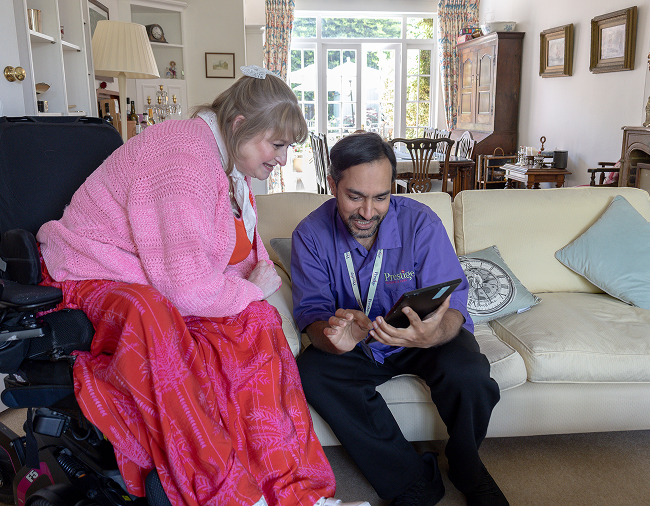

Care after a hospital stay or with health conditions
Returning home after hospital can sometimes mean needing more help than before. An older person may temporarily feel weaker or less confident with dressing, bathing, cooking or moving around their home.
Homecare can provide additional practical support during this period. Prestige Nursing & Care also provides dedicated convalescent care services where discharge and recovery are the primary focus.
Older people may also be living with conditions such as dementia, Parkinson’s disease, arthritis or the effects of a stroke. Where more specialist support is required, Prestige offers condition-specific services that can work alongside broader elderly homecare.
If care involves substantial clinical needs requiring specialist training or registered-nurse oversight, Prestige Nursing & Care also provides dedicated adult complex care.
Planning care around the whole person
Before care begins, we take time to understand more than a list of tasks.
An assessment considers your physical support needs alongside your routines, preferences and what matters to you.
This may include:
- Mobility and medication
- Food and drink preferences
- Daily routines
- Hobbies and interests
- Family relationships
- Pets
- Cultural or religious preferences
- Communication needs
- Activities you enjoy
- What you want to continue doing independently
Your care plan then helps carers understand both what support you require and how you want that support to be delivered.
When building a care team, we also consider the importance of feeling comfortable with the people coming into your home. Preferences, personality and shared interests can all be relevant when matching carers.


What if my parent does not think they need care?
Conversations about care can be difficult when someone has lived independently for many years.
It may help to focus on the particular activity becoming challenging rather than suggesting a substantial care package immediately.
For example, the conversation could begin with help preparing meals, shopping or managing household tasks.
Where someone can make their own decisions about care, their choices should remain central. Starting with a small amount of support can also give everybody time to become comfortable with the arrangement.
Why choose Prestige Nursing & Care for elderly homecare?
Prestige Nursing & Care has provided homecare across England and Scotland for over 80 years. When working with us, you can expect:
- Fully managed care
We provide a fully managed homecare service, giving clients and families ongoing support from experienced local care and clinical teams rather than leaving them to manage the care arrangement themselves.
- Care tailored around you
Your care plan is built around your health needs, routines, preferences and personal goals rather than taking a one-size-fits-all approach.
- Responsive local care teams
With local teams across England and Scotland, we can work with families and healthcare professionals to arrange appropriate support and respond as care needs change.
- Nurse-led clinical support
Our registered nurses provide clinical oversight, assessment, care planning, competency assessment and ongoing support for carers delivering specialist care at home.
- Trained and supported carers
Carers delivering specialist clinical care receive appropriate training and ongoing support, helping them provide care safely and confidently.
Elderly homecare or a care home?
Homecare and residential care provide different ways of receiving support.
With homecare, the person remains in their own property while carers visit to provide assistance. This can allow routines, relationships, pets and community connections to continue.
Residential care involves moving into a care setting where accommodation and support are provided together.
The right option depends on the person’s needs, preferences, home environment, support network and financial circumstances.
For someone who wants to remain at home and whose needs can appropriately be supported there, homecare may offer a way to retain familiar surroundings while receiving additional help.

How much does elderly homecare cost?
The cost depends on the type and amount of support required.
Factors include how frequently carers visit, the duration of visits, whether evening or overnight care is needed and the overall level of support required.
Before care begins, we can complete an assessment, recommend an appropriate arrangement and explain the associated cost.
Can I get help towards the cost of care?
Funding depends on your needs, financial circumstances and location.
In England, people who appear to need support with daily living can request a free care needs assessment from their local council. If eligible needs are identified, a separate financial assessment determines whether the council will contribute towards care costs.
People with substantial ongoing healthcare needs may qualify for NHS-funded support depending on their circumstances.
Different arrangements apply in Scotland, including free personal care for adults assessed as needing qualifying personal care services.
Arranging elderly homecare
Getting started begins with a conversation.
Contact your local Prestige Nursing & Care team and tell us a little about the support you are looking for. We can explain the options available and discuss the next steps for assessing your individual care needs.
From there, we can develop a care arrangement based around your routines, priorities and the level of assistance you require.